Melbourne Victory’s Tactics under Grant Brebner
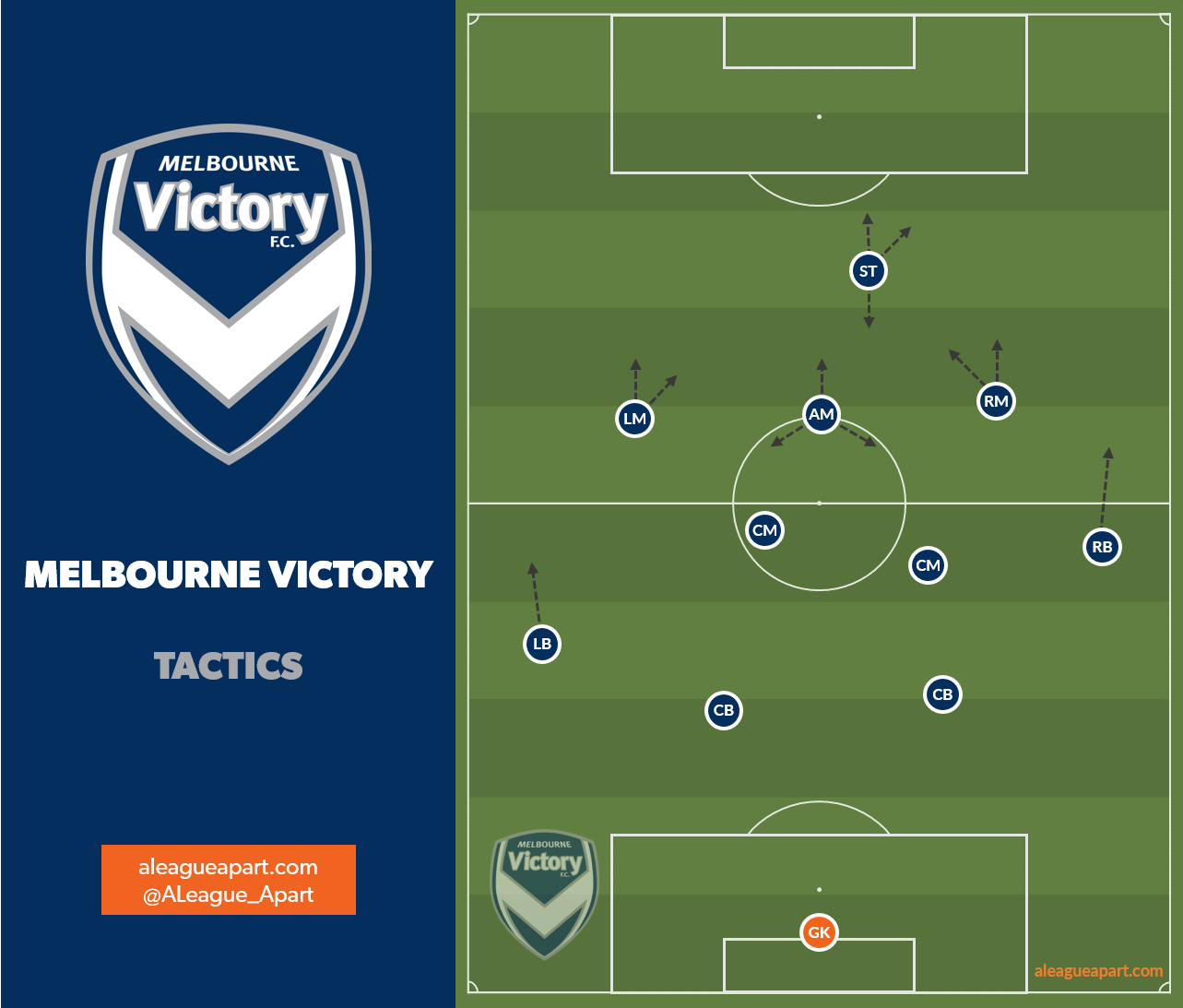
Grant Brebner was officially announced as Melbourne Victory’s Head Coach following the close of the 2019/20 A-League season, having filled in as caretaker following the departure of both Marco Kurz and then Carlos Perez Salvachua. His playing style was a bit of a mystery considering his lack of top-flight coaching history, but over the past five games we’ve had a glimpse of his tactics - a fairly fluid attacking style of play.
The pandemic certainly made it hard for Melbourne Victory with the loss of a few players. Ola Toivonen didn’t return to see out the season and joined Malmö in Sweden, Tim Hoogland left back to Europe, Jakob Poulsen retired, Lawrence Thomas left to Denmark, while Robbie Kruse picked up another injury in the leadup to the restart that would rule him out of the remaining games.
Thankfully, Grant Brebner’s experience in the Youth setup meant that he brought a few of his youth players in tow, whose playing styles he would have been familiar with.
Short buildup to draw press
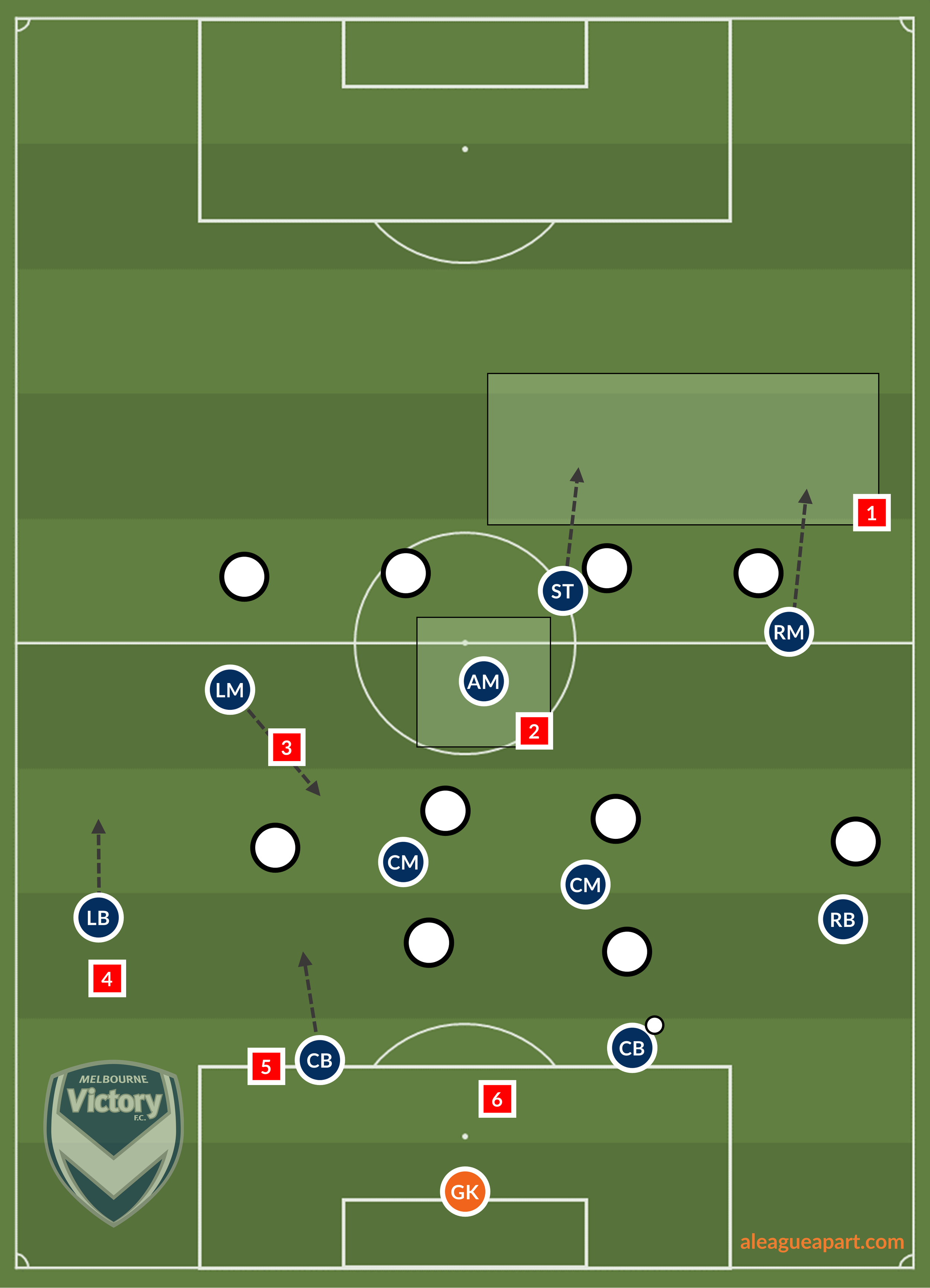
In buildup and from goal kicks Victory play short to the centrebacks who drop deep, sitting just outside the box. The two midfielders also come fairly short, with the fullbacks stepping forwards on the wings. When they receive the ball, the central midfielders don’t necessarily turn and play the ball forward in buildup but instead help to move the ball from one side to the other.
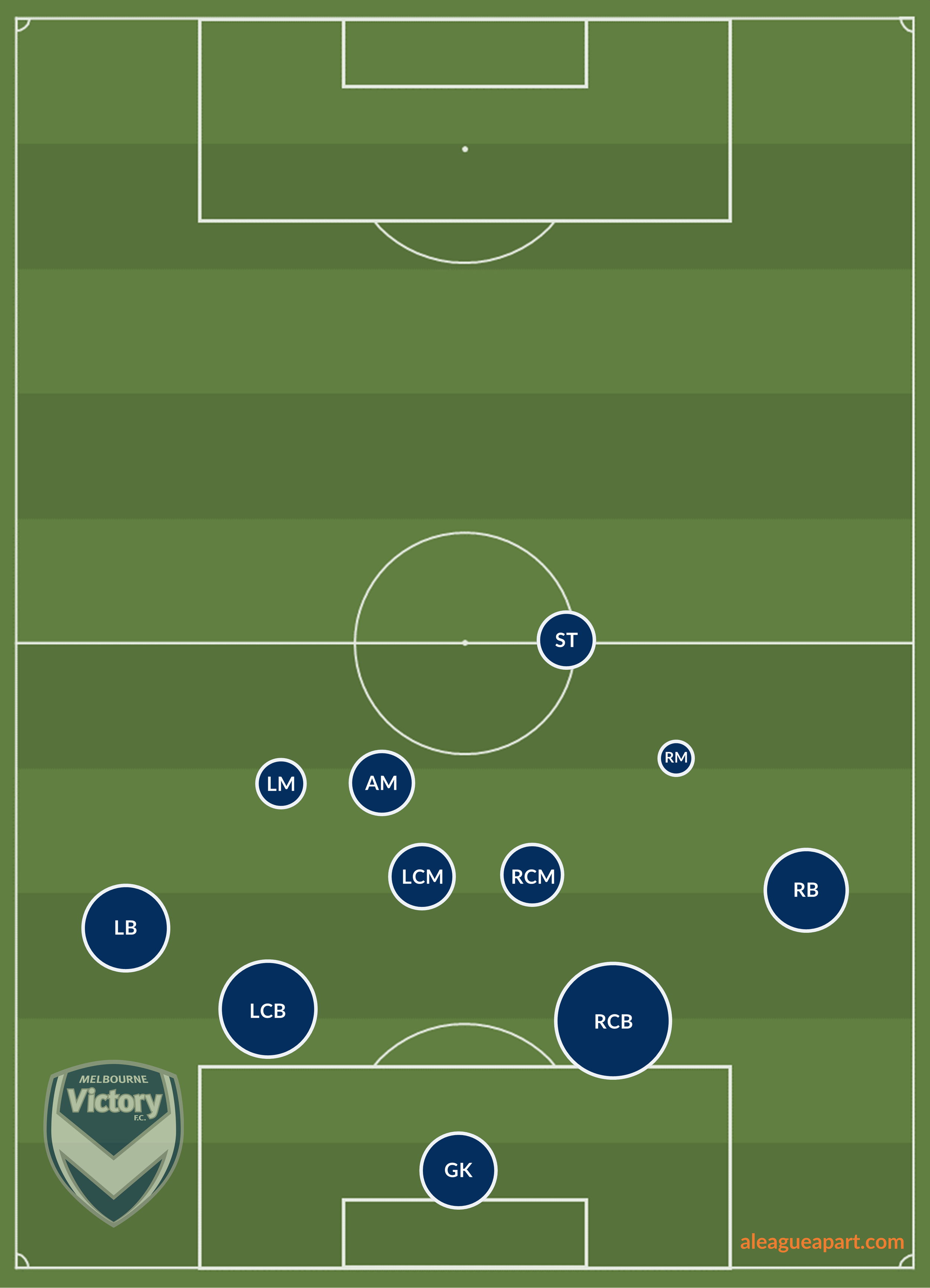
The reason for this isn’t because they have particularly talented passers at centreback or midfield, but more to draw out the opposition press. Often the centrebacks will pass the ball between each other and passes into the midfielders will be returned with the first touch, but sideways passes between defenders and backwards passes from the midfielders are common pressing triggers for an opposition.
As a team moves forward to press, their midfield and defence have to come up accordingly to ensure the spaces in between the lines are kept compact, which opens up space behind the defence as they step forwards. Victory will frequently try to play longer balls in behind the defence with their pacy attackers able to run in behind to receive.
The Victory midfielders will also come fairly short, which draws the opposition midfield further up the pitch too. The intention here is to open up space in between the defence and midfield for Victory’s attackers to be isolated against the defence. Direct balls forward can result in 4v4 or 3v3 situations, while Victory’s attackers are best with the ball at feet and able to drive forwards with the ball.
When they’re not being pressed, the centrebacks are happy to bring the ball out of defence, while the fullbacks are also comfortable on the ball and can carry the ball forwards on the flanks. The below diagrams show carries from defenders from the past 5 games.
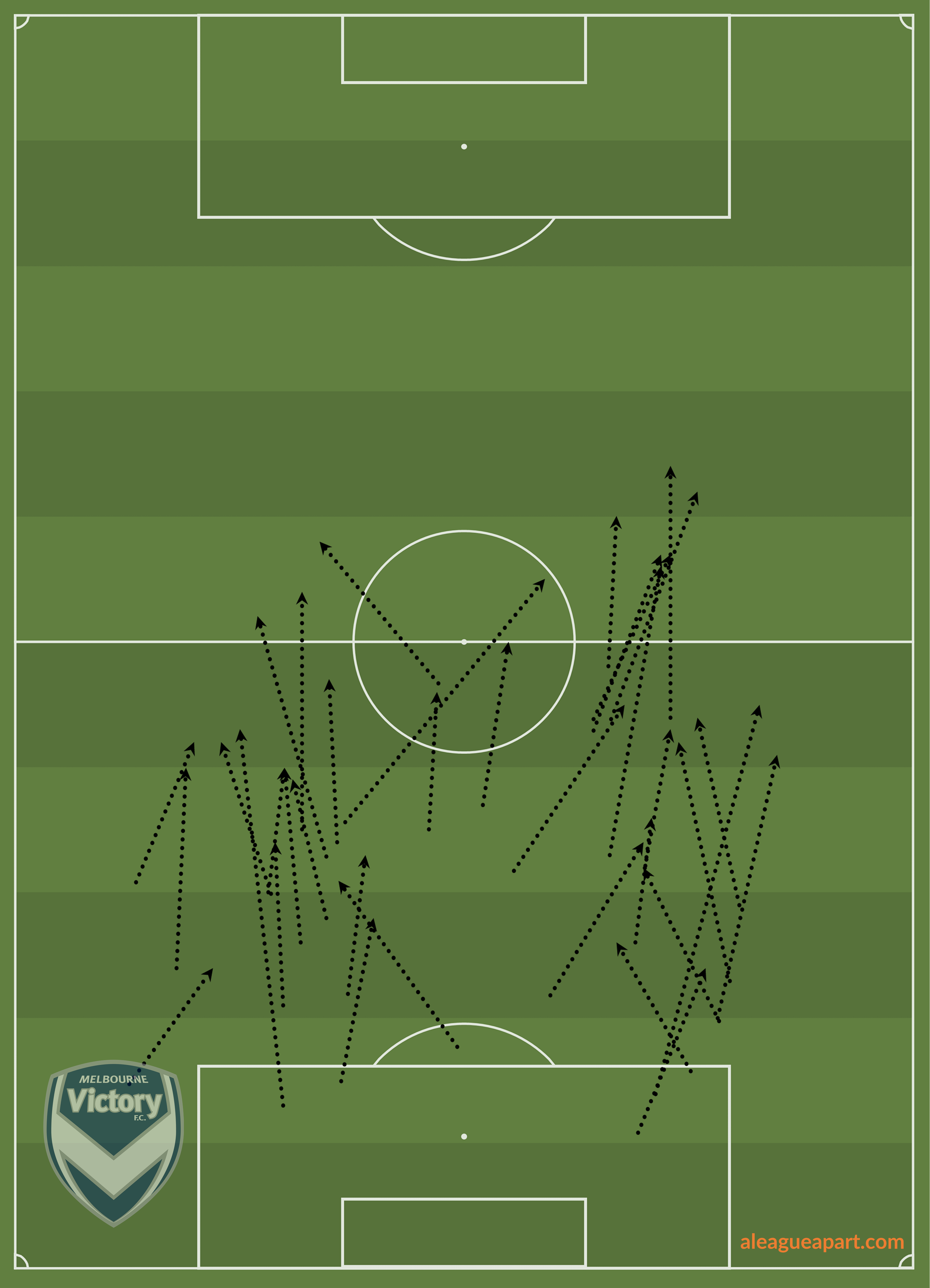
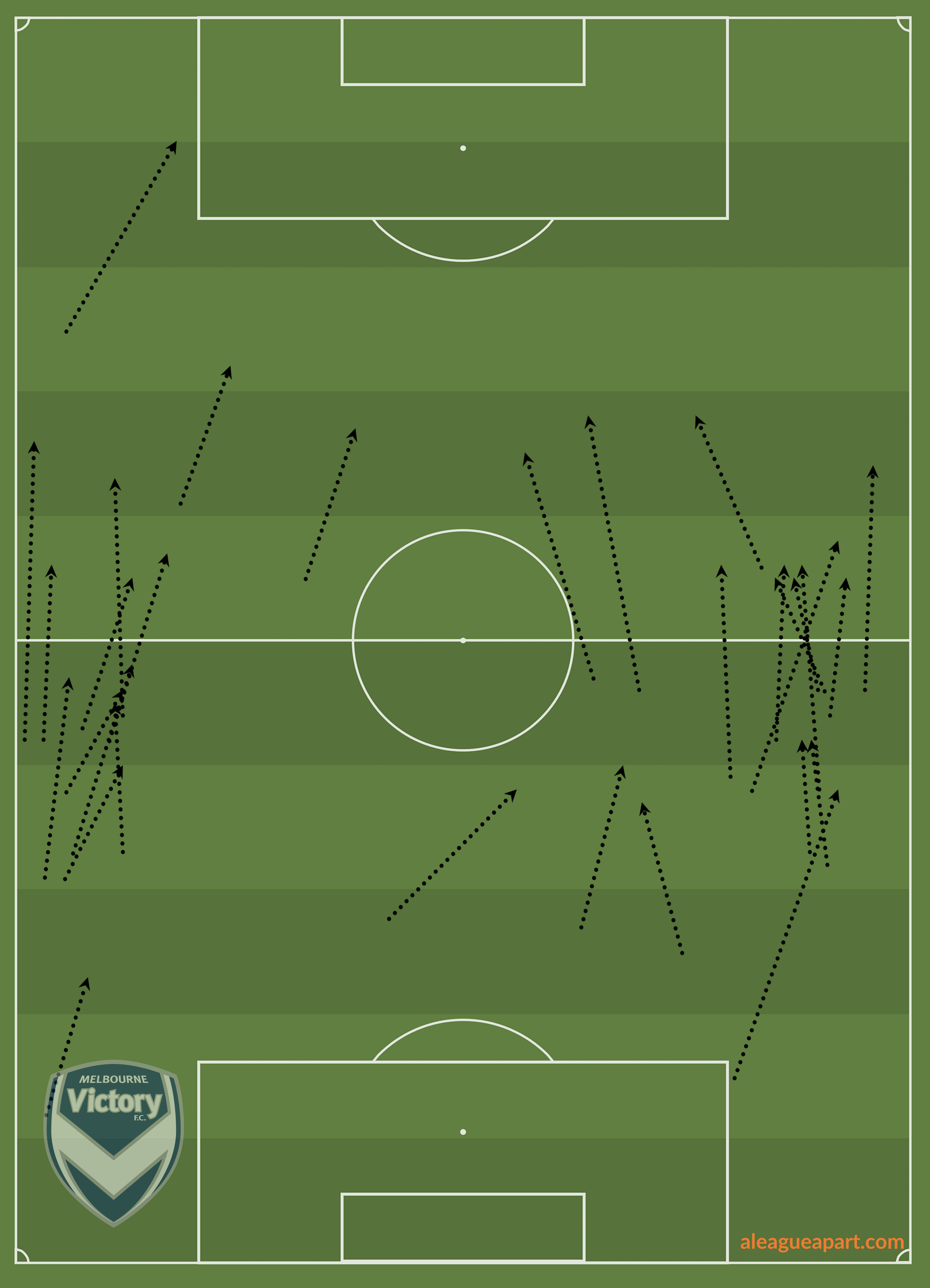
Victory’s ball progression can be summarised in a few options, usually dependent on whether the opposition presses or not.
Combination Play
The way Victory want to attack is through combination play, and they have set up with four attackers - a lone striker and three attacking midfielders (or two wingers + one central attacking midfielder) in a row of three behind - but they’ve been given a lot of freedom and are fluid in terms of their positioning. The attackers will pop up in each other’s positions through positional rotations and the wider players will come in more centrally to combine with each other.
This becomes even more dangerous when the opposition’s midfield has up the pitch (because of pressing or being caught in transition), often leaving the defence isolated against Victory’s attack, with Victory’s attack either picking up the ball in between the lines or in behind the defence, with the other attackers swarming forwards at pace.
With the wide players tucking inside, the responsibility to provide width on the outside comes to the fullbacks. Storm Roux on the right regularly comes forward in the attack, while Adama Traore contributes mainly through his late overlapping runs. Both fullbacks are happy to cross the ball into the box.
Defensive Principles
Melbourne Victory defend in a medium block, preventing their opponents from progressing the ball through the centre of the pitch.
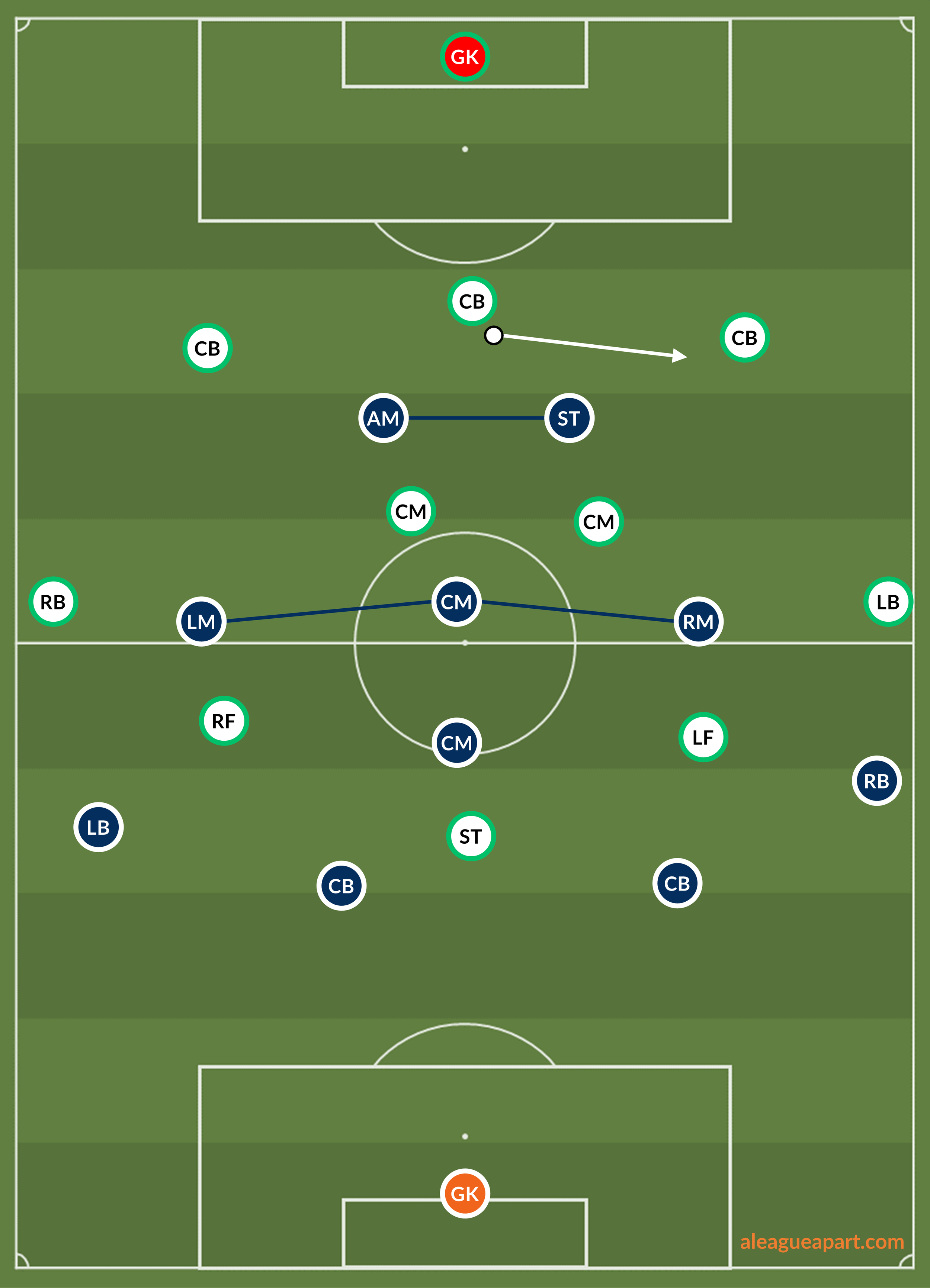
Up front, their defensive structure has two players, usually the striker and the attacking midfielder (or whichever players find themselves in the forward positions due to their rotations) coming up to support. They shuffle from side to side, cutting off passing lanes into the middle, and use pressure to encourage the outside centrebacks to drive forwards with the ball with the rest of the team then closing off the space and available options for the centreback.
Behind them, one of the central midfielders steps up into the second line, with the other midfielder positioned in front of the centrebacks to sweep up behind the front five. The centrebacks will step up to challenge if the striker comes short, with the defensive midfielder stepping into the back line to cover.
The fullbacks start deep to cover against long balls into the channels, but will step forward quickly to press the opposition wingbacks as they come forward if the ball is being played short instead.
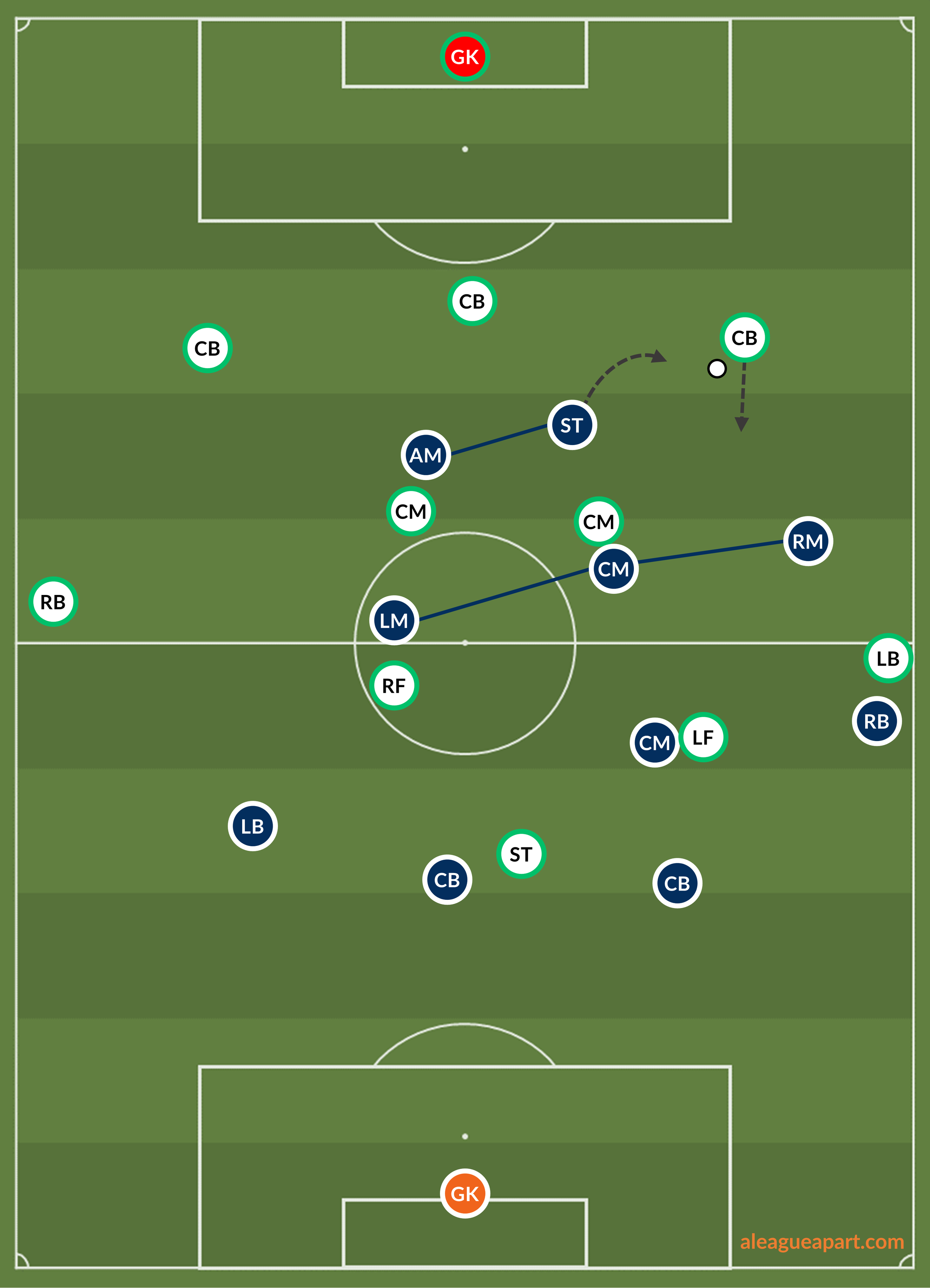
As the ball comes past midfield, the midfielder who steps up will drop back alongside the other defensive midfielder, while the attacking midfielder will drop back in defence also. The striker (who was usually Nabbout) would stay forwards, ready to provide an option in transition. This creates a 4-4-1-1 shape as the ball comes forwards, and if the attack comes through overloads out wide, the wingers will drop back and sit outside of the fullbacks to support.
There are two variations in the setup that we saw in the past five games:
Against a back-four (v Central Coast Mariners)
Victory instead set up in a 4-1-4-1 defensive shape. With one fewer centreback to press, instead of having two on the front line, only one was required to provide pressure, with the line of four able to span wider to match the fullbacks.
Against a system with three in midfield (v Perth, vWSW at times)
These setups introduced more challenges for Victory. With the opposition midfielders rotating their positions and dropping deep to receive, the midfielders had difficulties with closing out all options, while the wide midfielders were hesitant to come central to help out.
This was compounded with the wingbacks, who stayed wide in order to give an option for a switch of play, and meant that the fullbacks had to be very aggressive in their positioning to close them down.
This wasn’t too much of a problem against Perth, as the attackers Fornaroli and G. Popovic couldn’t take advantage, but Wanderers’ directness and supporting runners meant that they were able to exploit Victory at the back.
There have been three main weaknesses with this setup in defence:
1. Defensive midfielder has a lot of area to cover
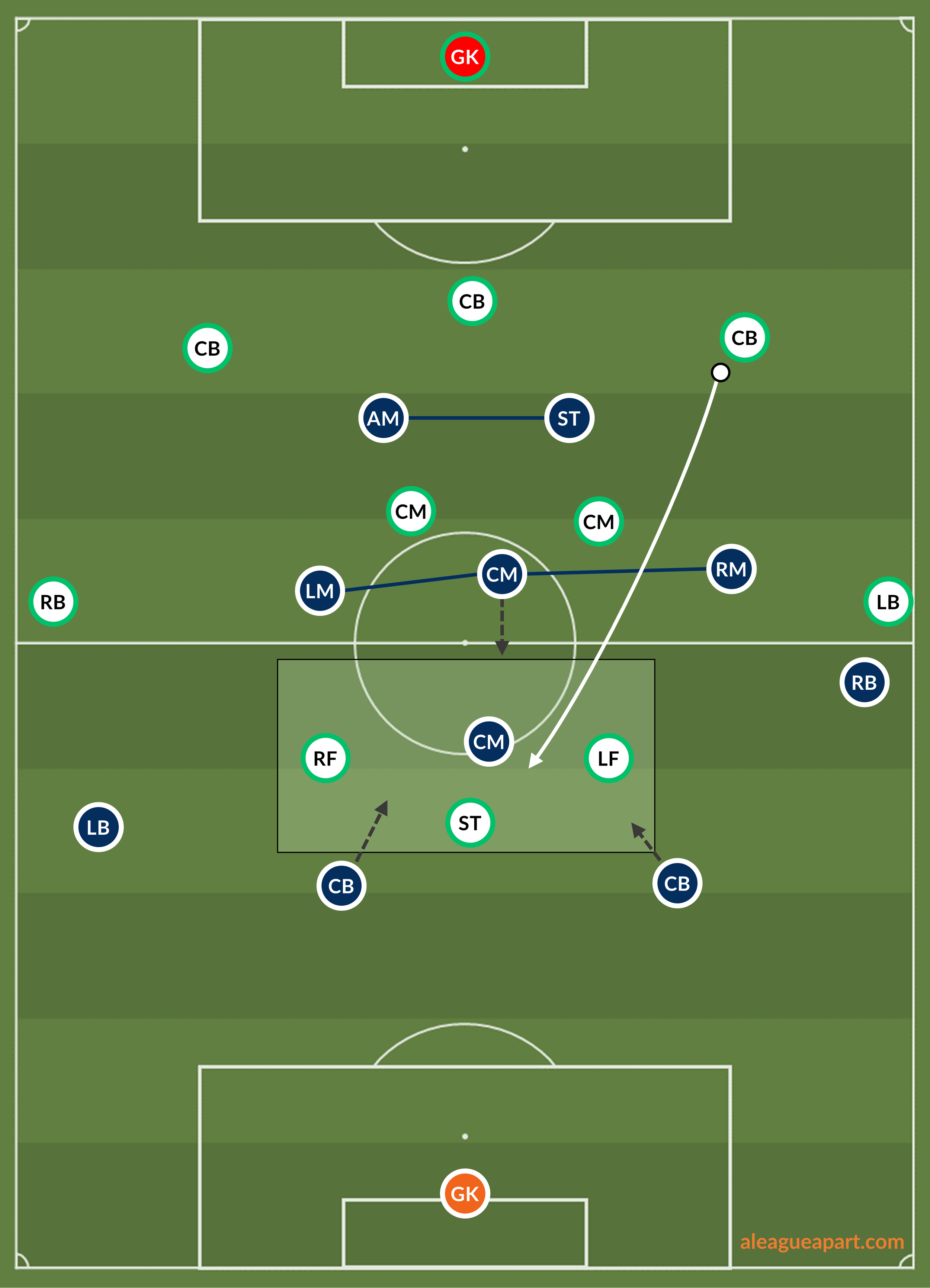
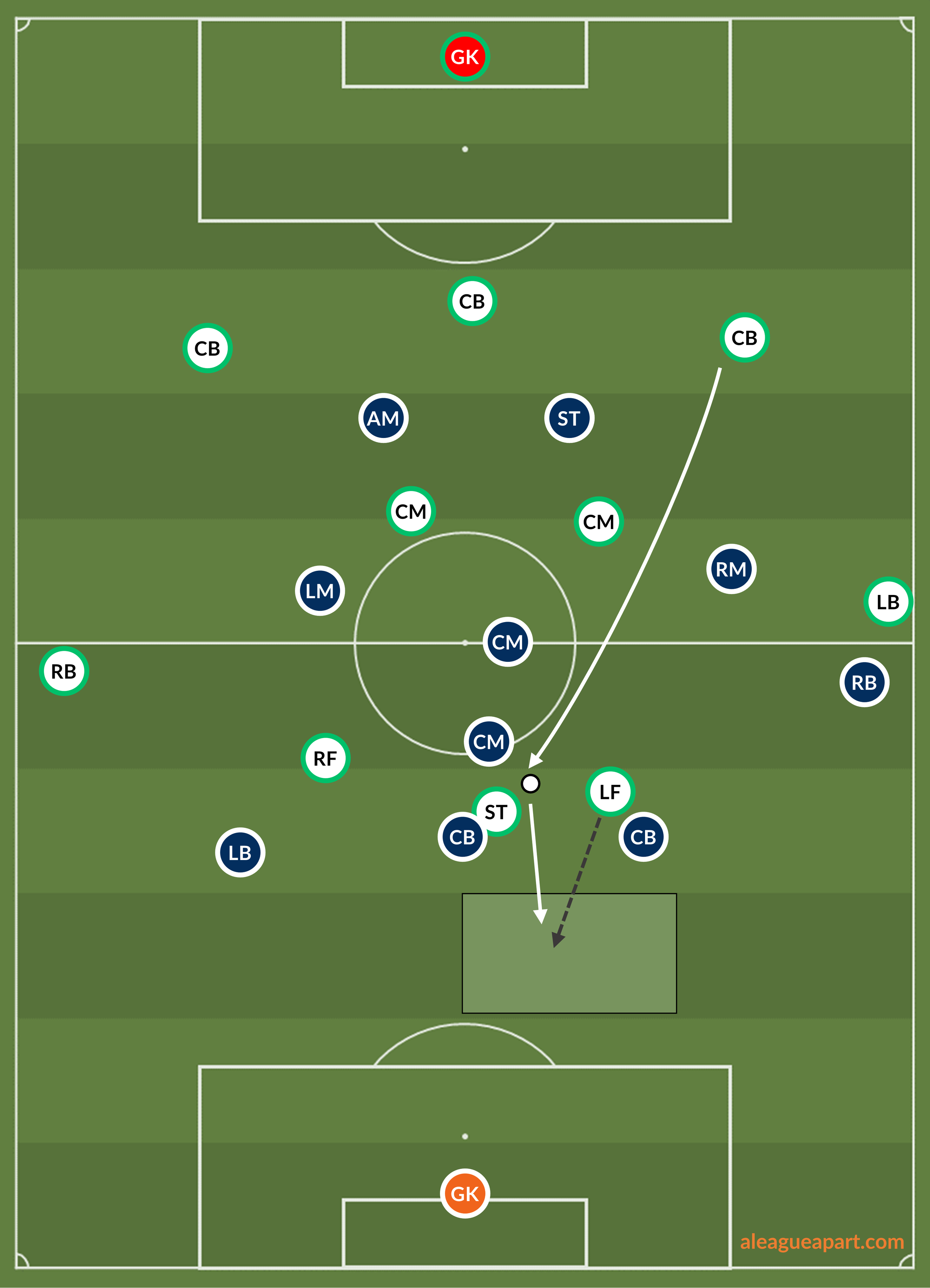
Direct balls into this space behind the press can be dangerous. The defensive midfielder has the main responsibility of covering this area, but with such a wide area, they can be outnumbered and outplayed with combination play, leaving the defence exposed.
There’s two important things that must happen to mitigate this - centrebacks must be aggressive in their positioning to step out to deal with the opposition receiving the ball in these areas and the other midfielders must be quick to recover.
2. Danger in behind after everyone drawn short
With five players forming the first defensive shape, it’s been possible to isolate the defence quickly once the defensive shape has been bypassed, especially if the centrebacks or fullbacks push forward to close down space. It’s possible to create wide gaps in Victory's defensive line, which either requires the defensive midfielder to compensate by dropping into the defensive line, or the other defenders coming across to cover. Additionally, players must stay with their opponents running in behind.
3. Overloads when not tracking back
Victory’s attackers can be a bit slow with tracking back to defend, and can result in overloads being easily created on the flanks (wide midfielders not coming back) or in midfield (attacking midfielder not coming back). This can also be seen when they lose the ball in transition - their attackers are keen to race up the field and if they lose the ball here, then they can be exposed quite easily.
Tactics still not finalised
Unlike some of the other coaching replacements who had previous roles as assistant manager before being granted the top job (JP de Marigny at Western Sydney Wanderers, Carl Veart at Adelaide), Brebner’s previous role was in the Youth set-up at Victory and is not likely to have had any input in the recruitment of players for the senior squad. The players (especially the senior players) in the squad may not have been the ones that he would like to have going forwards, and it’s possible that tactics were chosen based on the fit of the players. We might see a different style of football with a different set of players that can enact different tactics. With a few key departures, most notably up front where there are now no senior strikers at the club and only a few confirmed re-signings we’ll have to keep an eye out to see what might change going forward. I’ll be back to round up how any new signings might fit into the squad.