Melbourne Victory 1-3 Brisbane Roar
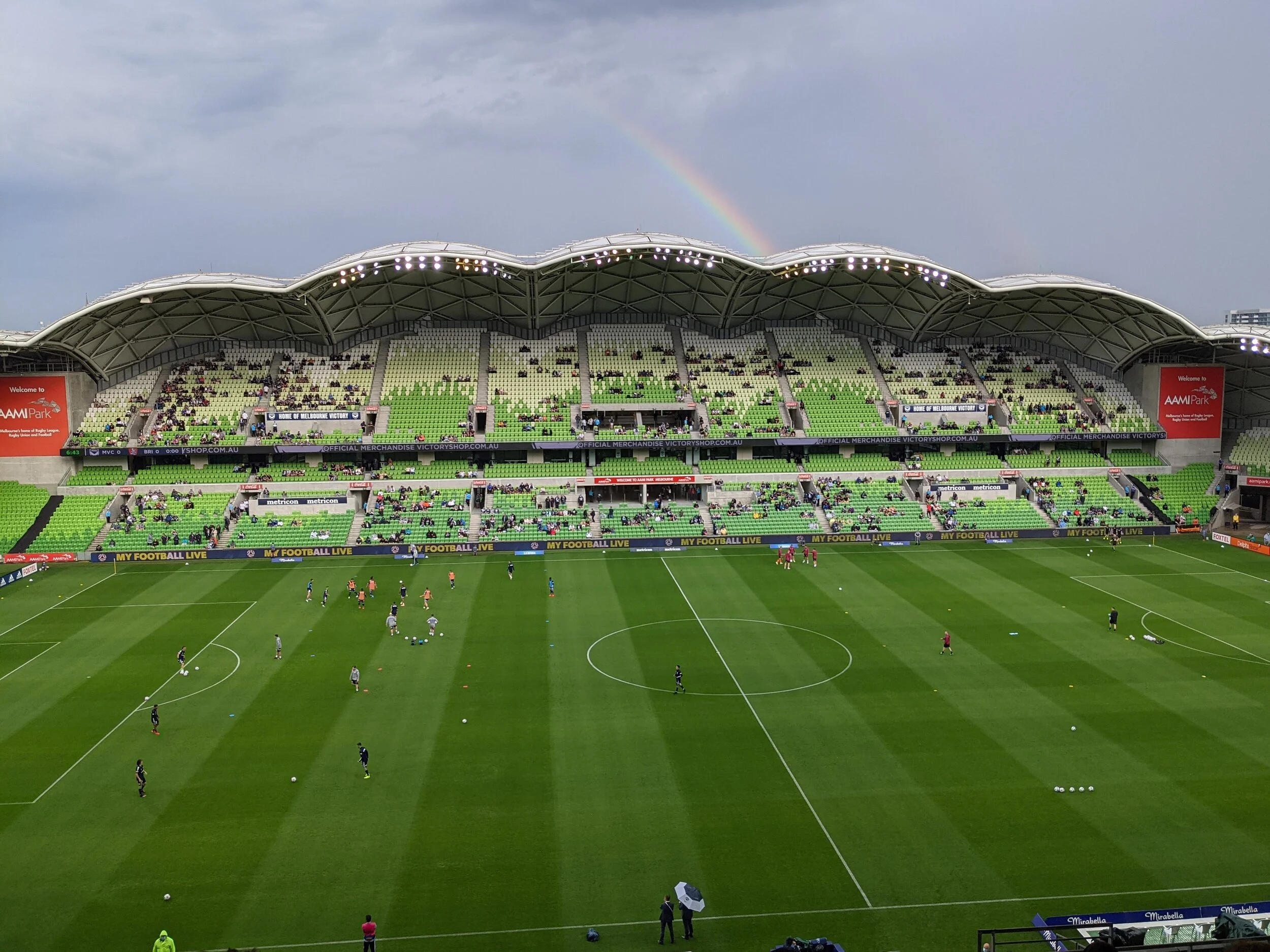
Melbourne Victory hosted Brisbane Roar on a rainy Melbourne afternoon at AAMI Park, starting their A-League campaign a week later than their opponents, who lost to Melbourne City the previous week.
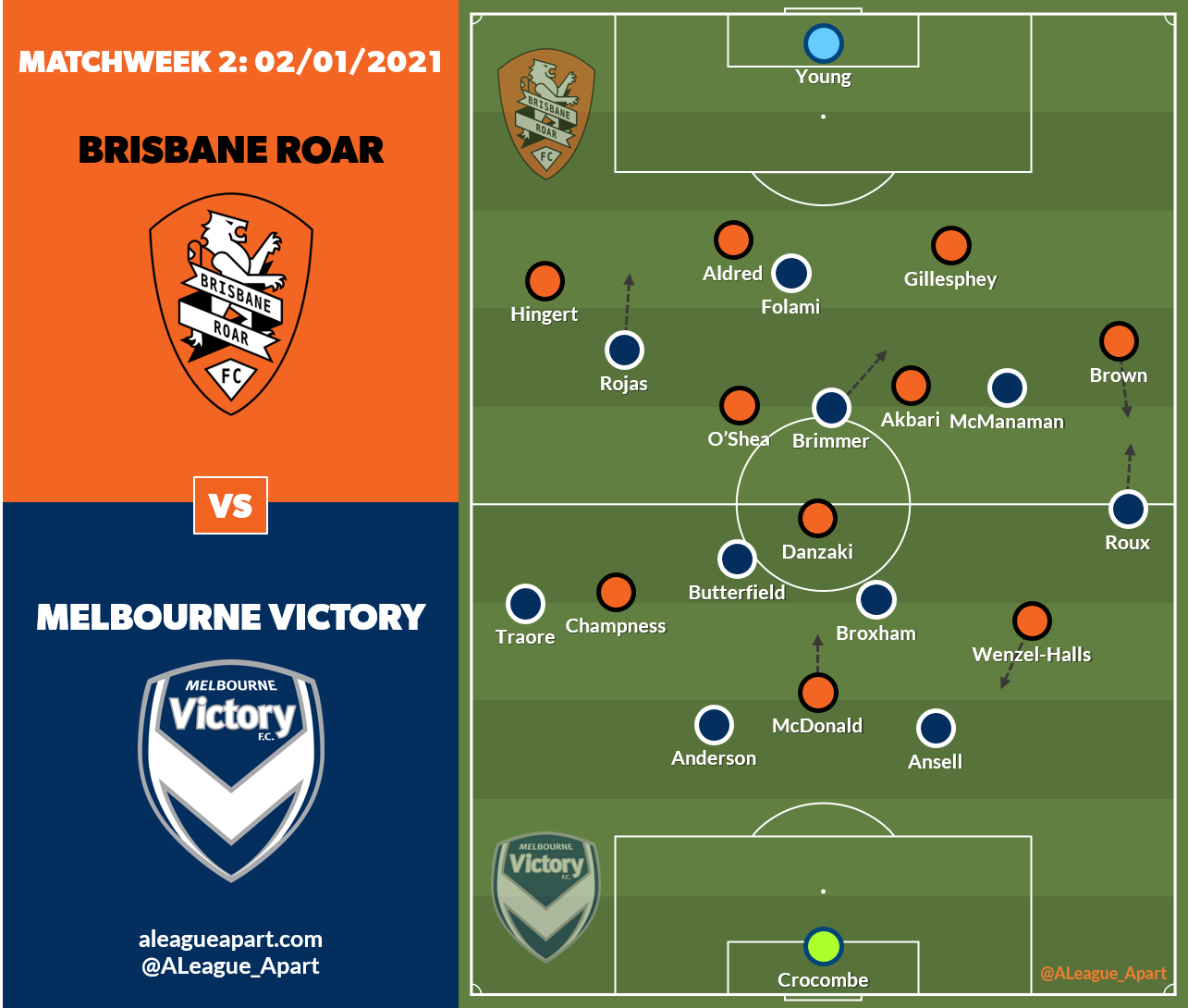
The Melbourne Victory lineup has changed from last season, with new(-ish) boss Grant Brebner overseeing a host of changes. Six players made their A-League debuts for Victory, including English imports Jacob Butterfield in midfield and Callum McManaman on the right. Jake Brimmer started just behind Ben Folami in the attacking midfield slot, with Marco Rojas taking up his position on the left wing. The other two headline signings from England didn’t start – Rudy Gestede’s fitness was only enough for the bench, while Ryan Shotton was still in hotel quarantine.
Warren Moon has stamped his style on Brisbane Roar, continuing their move away from a 5-at-the-back setup, with Tom Aldred and Macaulay Gillesphey continuing as the centre back pairing. The exciting attacking combination of Joey Champness (on the left), Riku Danzaki (in the middle) and Dylan Wenzel-Halls (on the right) started behind the veteran Scott McDonald. Rahmat Akbari made his second consecutive start, partnering Jay O’Shea in midfield.
Victory Early
Victory controlled most of the early possession. With the ball, the midfielders staggered their positioning, with Broxham sitting in front of his centre backs, Butterfield positioning himself higher and finally Brimmer positioning himself just behind Folami. Brimmer took up good positions in between the lines or outside the Brisbane central midfielders and was also quite energetic, looking to run in behind centrally or down the right flank.
His positioning on the right flank meant he could interact well with the other right-sided players, McManaman and Storm Roux. McManaman and Roux look to be developing a good understanding of each other’s playing styles, with Roux’s natural tendencies to drive forward helping to create space for McManaman to either cut inside or work the overlap. Brimmer’s runs out to the right meant that the three of them could combine with each other well and it was no surprise to see much of Victory’s passing and build up play involve those three.
On the other flank, things were a bit simpler, with Rojas continually looking to run in behind. Folami drifted to the left and came short to open up space by drawing Aldred out of the defensive line. This had less success than the forays down the right due to a combination of Brisbane reducing space in behind by sitting deep, Folami not having too much success with his link up play, and also good coverage in a well-drilled defensive unit.
Brisbane’s Response
Brisbane’s defence was set up in a mid block, with the forward line engaging only once the Victory build-up entered the middle third. McDonald made a nuisance of himself by pressing the centre backs, but on the left, Champness would frequently miss his pressing cues, resulting in easy passage for Victory into the midfield (and frustration from his teammates). Behind the forward line, Akbari shifted to the left to cover Champness’ flank and to assist with the Victory trio of McManaman, Brimmer and Roux, without too much success – Victory managed five crosses from the right in the first 15 minutes.
Warren Moon responded by calling for his two wingers to switch positions, with Champness going out to the right and Wenzel-Halls coming over to the left. This was likely for three reasons:
Reduce Champness’ defensive responsibilities. Adama Traore wasn’t as adventurous as Roux in his positioning, so Champness wouldn’t have to track as many overlapping runs.
Provide additional defensive cover on Brisbane’s left flank. Wenzel-Halls’ defensive work rate is significantly higher than Champness’, and his high stamina would also ensure that he could still break forward.
Pin back Roux. Wenzel-Halls’ direct running provides a different threat to the trickery of Champness that can really only be defended against by someone matching his pace. This might cause Roux to think twice about leaving him to run at the defence.
This switch actually paid off immediately, with Wenzel-Halls popping up unmarked in the box to receive the ball after Corey Brown’s excellent run on the outside and McDonald providing the final touch to score.
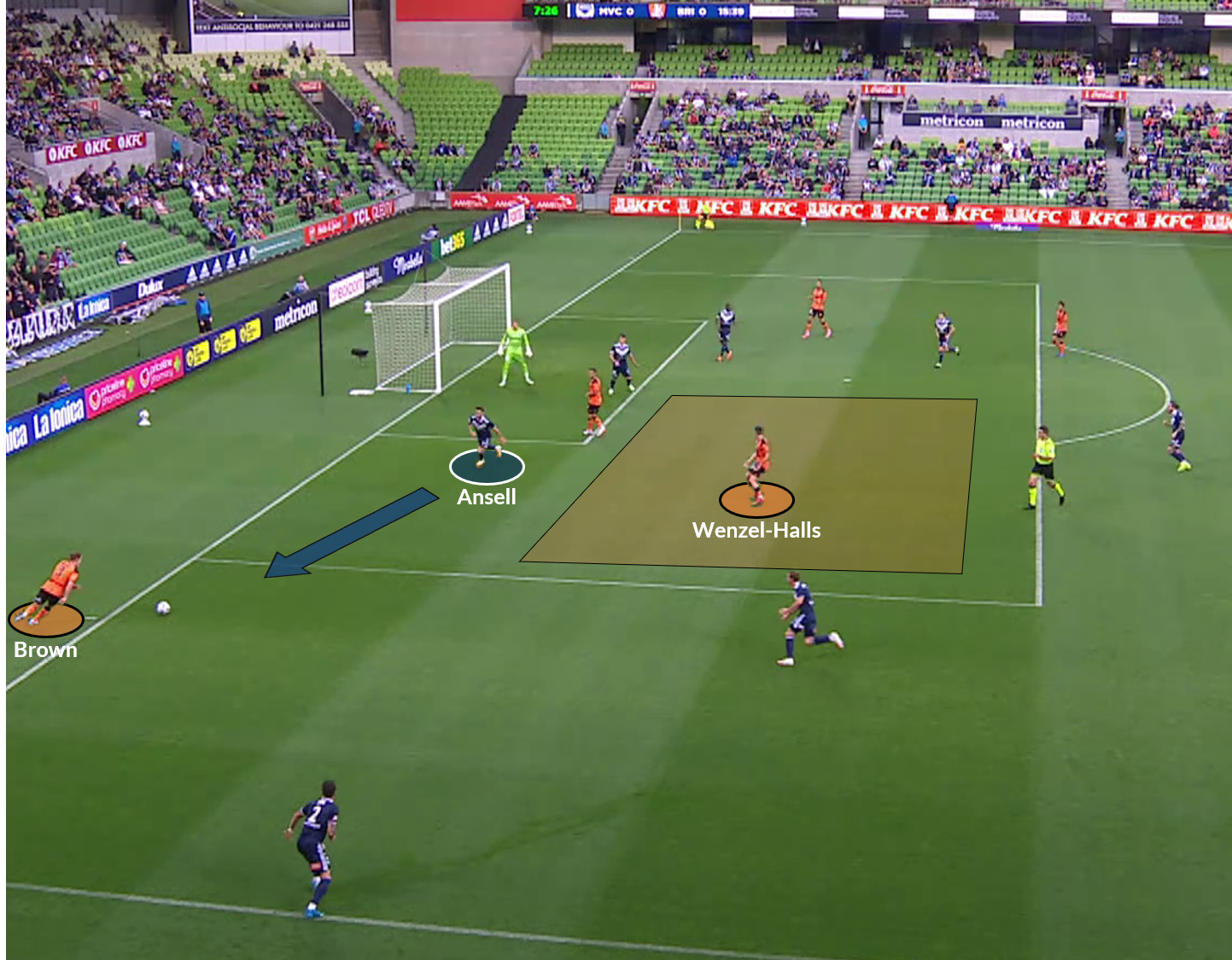
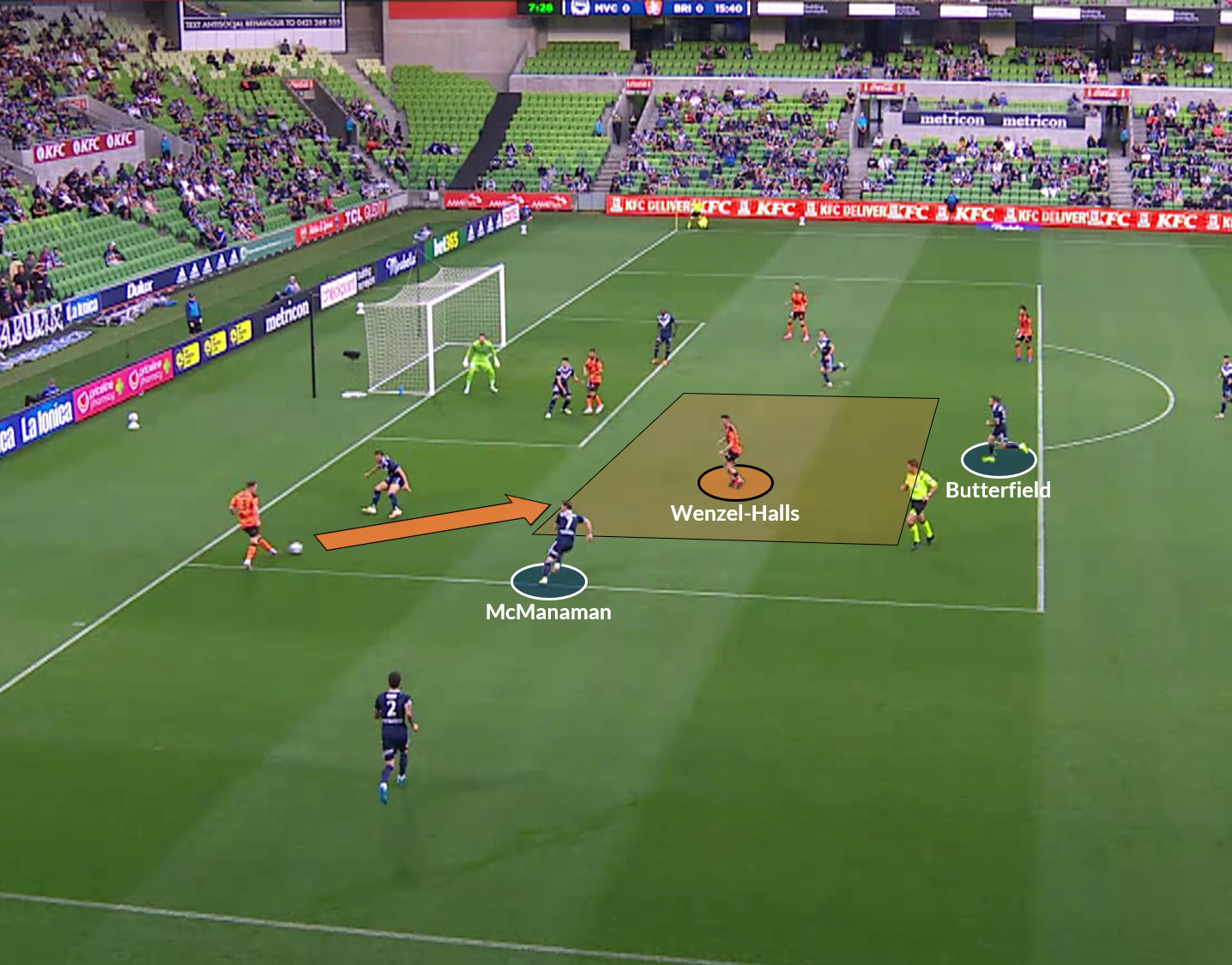
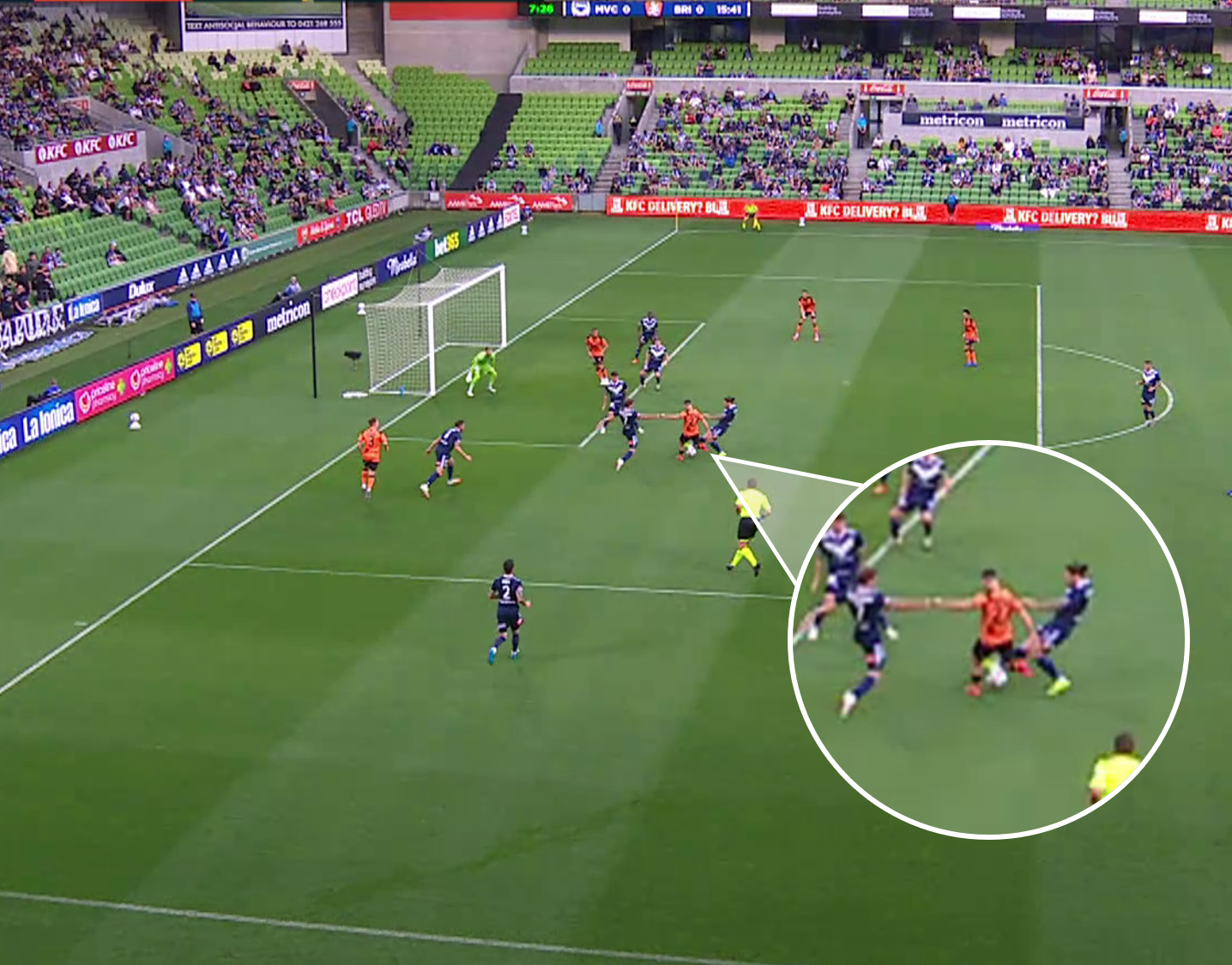
It was a bit of a surprise to see how much space Wenzel-Halls managed to get into in the box. Butterfield and McManaman had lapses, with McManaman probably believing the ball was heading out of play and also that he would be the one picking up Brown’s entry into the box, while Butterfield was not alive to the danger developing in the box with Broxham having been committed on the other flank earlier in the move.
They both recovered from their initial positioning well, and were unlucky to see the ball go through Butterfield’s legs and also to marginally beat the offside line.
Victory’s Press
It was somewhat against the run of play, with Victory having had more of the ball. Victory’s press made it difficult for Brisbane to build up play, with the front five pushing energetically and keeping the midfielders, particularly O'Shea, under tight marking.
The press directly resulted in the equaliser, with McManaman (who was excellent in his pressing all game) pouncing on Akbari’s slip to score a fantastic debut goal. The way he dribbles past players is so satisfying to watch - his excellent close control allows him to beat players with small touches that take it out of the defender’s reach while at the same time setting himself up for his next action perfectly - in this case, a beautiful far-post finish.
Brisbane’s route of attack was to bypass this press by playing direct balls in behind or into the spaces between midfield and defence. If they managed to receive the ball and beat a man in these spaces, the attackers would drive forwards at pace and run at the backpedaling Victory defence 2v2 or 3v3.
This was the way the rest of the half was played; brief Brisbane forays punctuating Victory’s possession dominance, with crossing opportunities creating Victory’s two best chances to go ahead - Ansell hitting the post from a corner and Brimmer’s free header blocked by Jack Hingert, who was excellent in defence all game.
Second Half
10 minutes into the second half, Moon made a tactical substitution, replacing Champness with Jesse Daley. This saw a bit of a reshuffle in midfield with Danzaki moving out to the right wing, Daley partnering Akbari in midfield and O'Shea moving forward into the attacking midfield slot. Brebner followed suit, with Folami replacing Gestede and Barnett replacing Butterfield. Gestede was welcomed to the A-League by the almost immediate concession of a goal from a corner.
(Side note: Ansell & Roux vs Aldred & Gillesphey seems like a losing battle at corners. They have similar heights, but very different physicalities in favour of Brisbane. I wonder if there will be a change in the upcoming reverse fixture.)
The substitutions changed the complexion of the game:
O’Shea in more space. O’Shea’s advanced positioning meant that he had some freedom from his defensive responsibilities (with Daley picking them up instead) and allowed him to receive the ball in more dangerous areas. He doubled his passing numbers (17 passess attempted in the first half vs 32 in the second half) and placed a shot from outside the box just wide.
Danzaki’s extra industry from the right. Danzaki contributed both in attack and defence, helping Brisbane to win and retain possession. Victory had started to fade, so their press was no longer as high and allowed Danzaki to get into the game more, giving Brisbane an extra possession retention option on the right.
Gestede’s presence. Folami had provided a few runs in behind, but not a lot else. Gestede’s introduction made sense - he would provide a focal point for the attack, a target for crosses and flick-ons for Rojas and Barnett to run onto. The trade-off was less of a presence in defensive pressing, but was offset by...
...Barnett’s running. Butterfield had played alright, but he hadn’t provided as much creativity in the form of incisive passes. With Gestede on the pitch and a losing scoreline, it made more sense to bring on a willing runner in both attack and defence. Brimmer dropped to play deeper alongside Broxham.
Brisbane managed to hold onto the ball a lot more, building up attacks with their fullbacks joining high up the pitch and it was their turn to make things difficult for Victory to play out of the back.
While it worked out for Brisbane, it was less effective for Victory, who still couldn’t find the final ball. Gestede was not yet fully up to speed against the physical Roar centre backs, and Victory found it increasingly more difficult to find good deliveries, especially with Roux requiring treatment for what looked like cramp. To make things worse, Rojas coming off injured meant that there was little threat for runs in behind. While Barnett adds energy, he’s much more effective in midfield rather than the final third and we ended up seeing him swapping back with Brimmer. (In hindsight, could Birkan Kirdar have been a useful substitution?)
Wenzel-Halls had the final say, sprinting from halfway to latch onto a hoofed clearance before beating Ansell brilliantly and slotting home.
Summary
Melbourne Victory had a game of two halves. The energy and dynamism of the first half gave way to a second half that didn’t live up to the high expectations set in the first half. There are still a few issues that haven’t been solved since the Asian Champions League, notably their presence in attack. Out of 13 touches in the opposition box, 6 were from corners, with only 2 touches in the box in the second half. Gestede should help address that problem, so we’ll give him some time.
Brisbane Roar recovered from a somewhat unlucky loss to Melbourne City with another good performance. The Roar front four is probably one of the most balanced in the league. Combining pace (Wenzel-Halls), trickery (Champness), creativity and work rate (Danzaki), and hold-up and general attacking play (McDonald). Their midfield depth looks strong with functional players like Akbari and Daley, while their defence is solid, anchored by the centre back pairing of Aldred and Gillesphey.
WithThis article was originally published on The Reserve Team.