Melbourne Victory: Lessons from the Asian Champions League
Melbourne Victory (surprisingly) got the furthest in the Asian Champions League, picking up a crucial win against FC Seoul to make it to the Round of 16. While Ulsan Hyundai ultimately ended up being too much for them, Victory will go home happy, with a few positive reflections and a few areas to consider.
Squad Integration
With a completely revamped squad, these games were a fantastic opportunity to get everyone on the same page. New signings that played a part included Ben Folami, Callum Mcmanaman, Jake Brimmer, Jacob Butterfield, Nick Ansell, Dylan Ryan and Max Crocombe, and they each managed to pick up at least 180 minutes of game time against highly competitive teams.
Defensive Shape
One of the notable aspects of Brebner’s Victory setup is a player who is usually a midfielder joining the striker in a defensive structure. We saw Birkan Kirdar resume his role as a more advanced midfielder, but also saw players usually found in central midfield appear further forward - Jake Brimmer, Jay Barnett and Jacob Butterfield (coincidentally all with names abbreviated as JB!) - all played in the advanced pressing midfielder role.
Behind the front two, Victory had two different midfield setups. They generally started with one midfielder stepping up to form a line of 3 alongside the wide midfielders, with the other midfielder dropping to cover in front of the defence, resulting in a 4-1-3-2 shape. As the games went on, Victory started to be a bit more conservative in defence, and instead defended with the two midfielders in a line behind, in a more 4-4-2/4-4-1-1 shape.
With Victory generally playing a defensive game and frequently out of possession (average possession over the five games was just over 40%), this meant that the shape often resembled a 4-4-2, with the pressing midfielder appearing to play as a striker. (In possession, though, the pressing midfielder would drop off slightly to help link play, resuming the general 4-2-3-1 shape that Victory have used.)
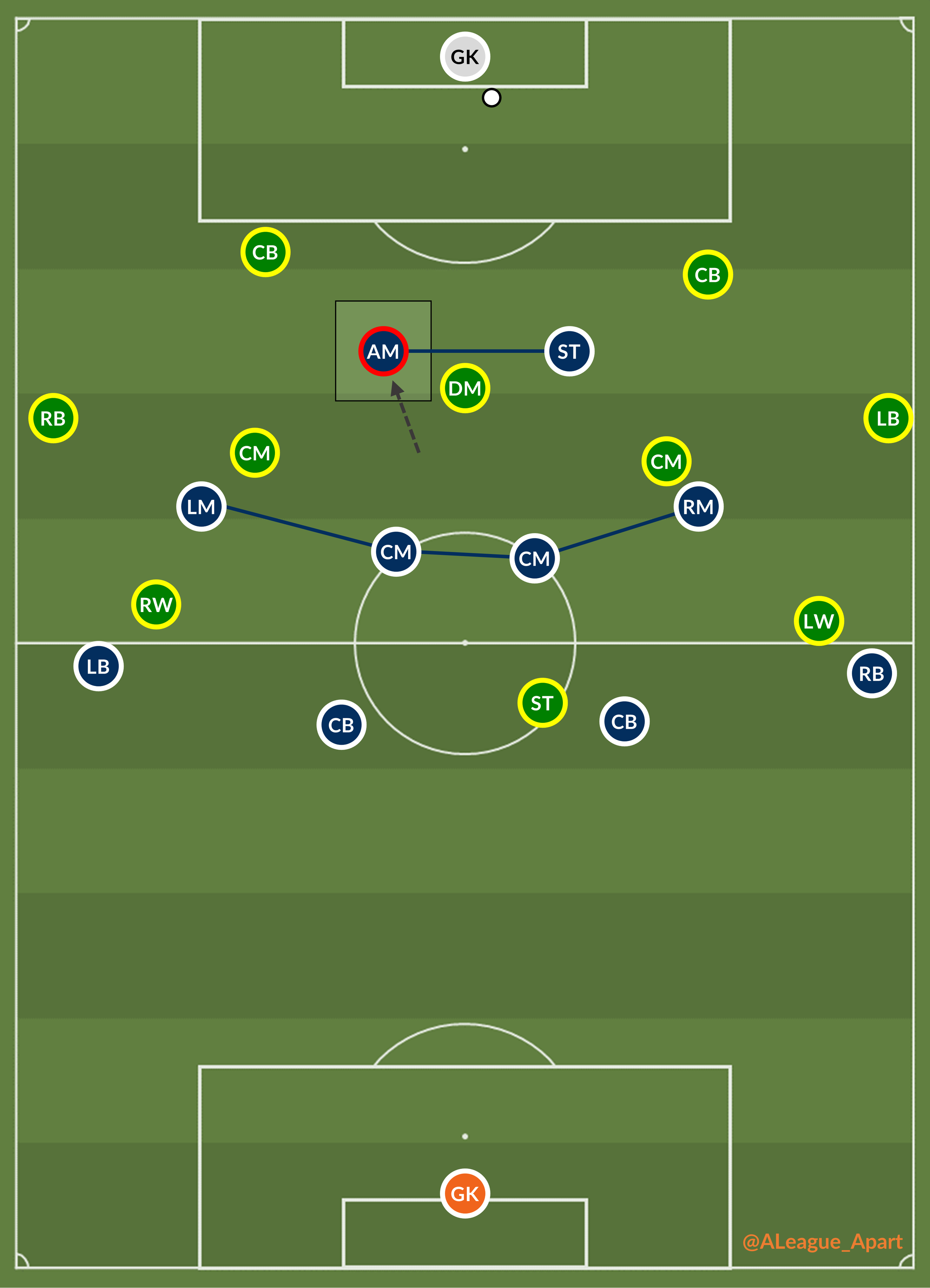
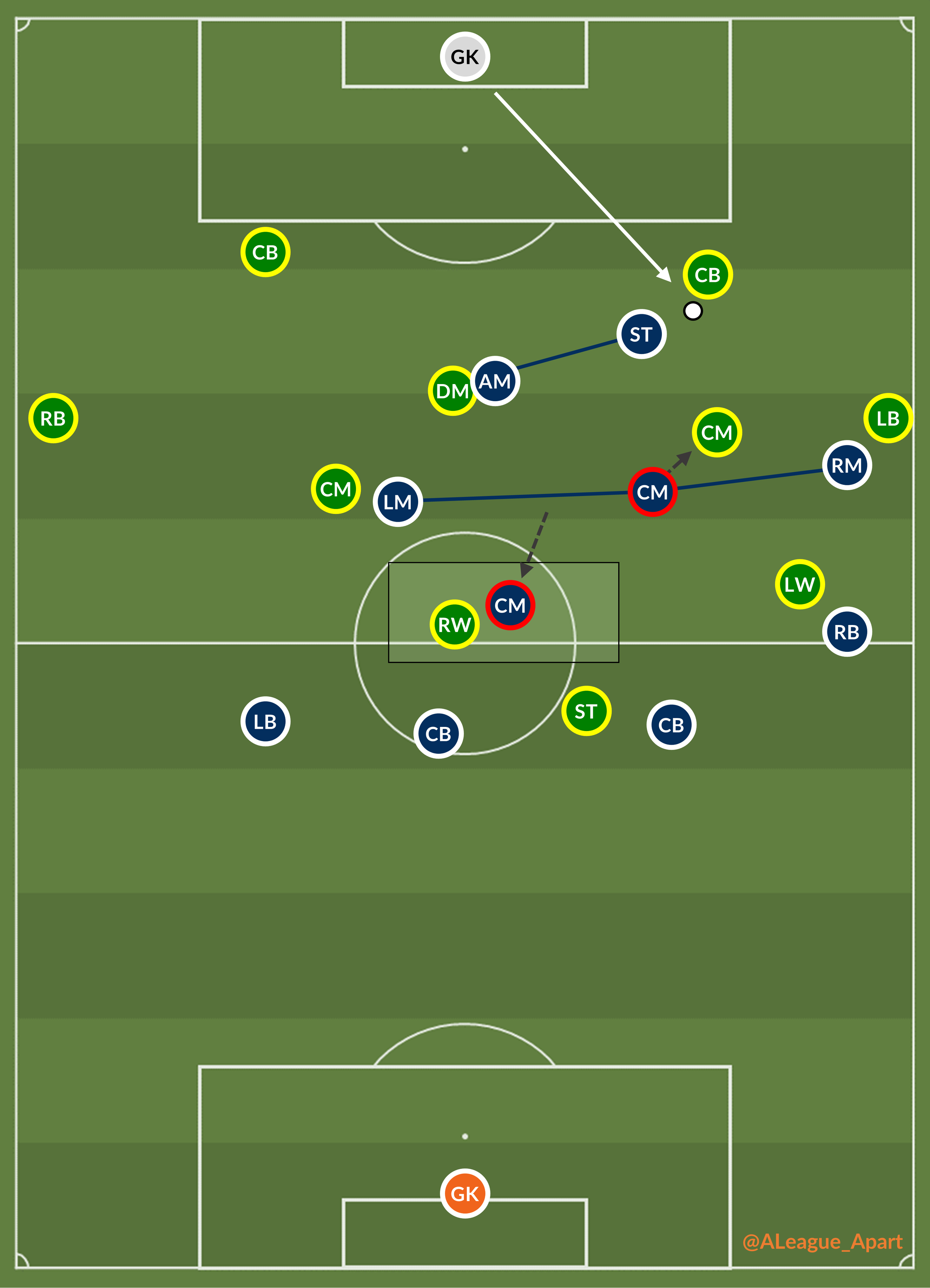
Butterfield, Brimmer & Barnett played this role very well, with their energy and defensive workrate meaning they would contribute to the press effectively and then drop back in front of the other midfielders when the opposition broke through the first line of the press.
The use of this defensive structure raises two questions for Victory going into the A-League season:
Will they continue to press as high?
While the A-League is transitioning to winter, games will still take place over the summer months and the high temperatures of January & February will quickly sap any player’s energy, especially if there is a decision to press high.
On the other hand, A-League defences generally don’t have as much technical quality as their ACL counterparts, so an effective high press could result in a higher quantity of turnovers in dangerous attacking situations.
Squad Depth
The pressing role has been taken up by a midfielder in most of the minutes that Victory played in the ACL. Will this role be reprised by a midfielder again in the A-League? If so, there are two further considerations.
Firstly, do any of the Victory attacking complement have the defensive workrate to take up this role? We saw Rojas play in one of the central roles in the second game against Beijing Guoan, and after about 60 minutes it looked like he was exhausted, coming off to get a bottle of water and then walking around the pitch. None of Victory’s other attacking options seem to be particularly suited to such a role either - active in the press and also effective at dropping deep to link play when in possession.
Secondly, if the role is taken up by a midfielder it further squeezes the number of positions available for the remaining attackers. As it stands, Victory have 7 attackers (Rudy Gestede, Ben Folami, Marco Rojas, Callum McManaman, Robbie Kruse, Elvis Kamsoba & Luis Lawrie-Lattanzio) - who would seemingly then be fighting for one of three attacking spots in the starting eleven. Can Brebner find a good balance of minutes and keep his attacking complement happy?
Spaces in front of Defence
With the press committing men forward, spaces in front of the defensive line can appear. Victory have generally had two solutions to alleviate this; one midfielder staying somewhat deeper than the rest to cover in behind, and centre backs defending on the front-foot - stepping up aggressively to make it difficult for opposition players trying to exploit the space.
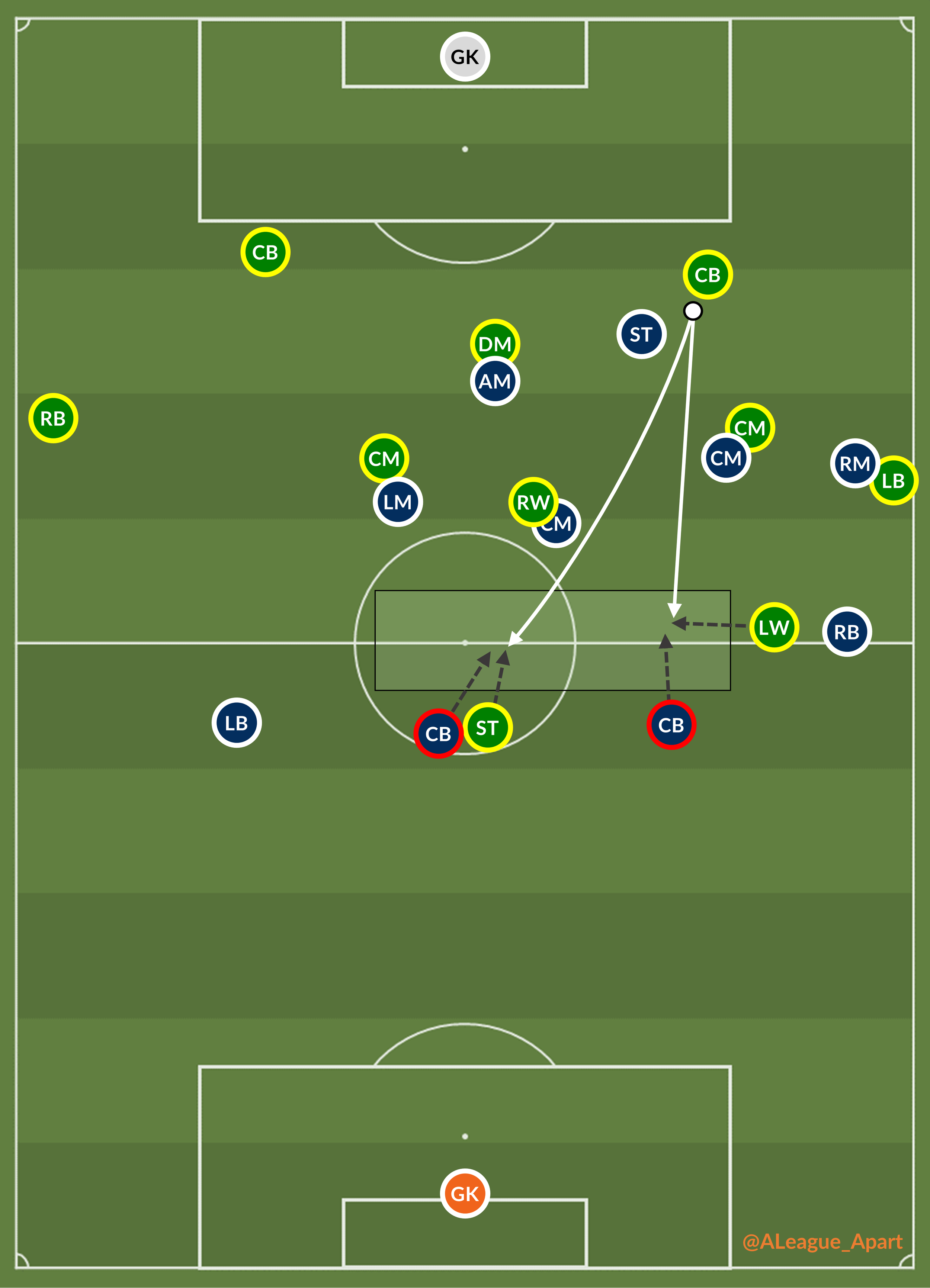
Off season recruitment has enabled this in defence, with Nick Ansell and Dylan Ryan (alongside Aaron Anderson) who are quick and aggressive, able to quickly close down space. On the outside, the fullbacks Storm Roux and Adama Traore also move up and inside the pitch to help. They haven’t always been hyper effective in winning these duels to stop the ball being advanced, but for now, it’s been promising.
Midfield has been a bit more challenging. The deeper midfielder roles seem to have a few defensive responsibilities:
Joining the press by moving forwards
Closing down players as they enter into the midfield zone
Tracking runners as they run into the channels between the centreback & fullback
Dropping into the back line to cover defenders who push up
Tracking back to defend the box when the ball is in crossing positions
This combination of responsibilities means that the midfielders will find themselves in all sorts of locations - forward, wide and having to run back deep centrally - and decision making will be key for these players
While the players generally have been energetic in these slots, their decision making, positioning and recovery runs have been put to the test heavily as they try to balance their responsibilities above and also ensure that they support their midfield partners’ corresponding movements. Butterfield has been less energetic, although it looks like he’s still not fully at match fitness.
At times, it seems that Victory have struggled with the lack of a pure defensive midfielder - a role that the recently departed (and I think slightly underrated) Migjen Basha performed quite well in. While he wasn’t particularly effective when pushing up the pitch, he had played an understated role of anchoring the midfield and slotting into the defence when necessary. While Broxham is the most defensive midfield option, it seems that none of the midfielders have a particularly defence-first, covering mindset.
Finally, we’ve seen Brimmer, Barnett & Butterfield all make appearances further up the pitch. If that’s the longer-term solution to the advanced pressing role, does Melbourne Victory have sufficient squad depth in midfield to cover the two roles?
How to Attack?
It might be a bit harsh to judge Victory on their attack - they’ve had to be very defensively focused against the dominant Beijing Guoan and FC Seoul, only getting real opportunities to enjoy possession and attack against Chiangrai United. In addition, they’ve also missed two huge attacking contributors, Robbie Kruse, who is still not yet at 100% fitness, and Rudy Gestede, who was only announced (bizarrely by the Fox Sports commentary team during their first game) after the tournament restarted.
Combination play between the attackers came up a bit short, and the best opportunities came through chances on the counter, or good individual wing play - beating a man out wide and then dribbling into the box to cross or shoot. Of the attackers, Marco Rojas, Ben Folami and Luis Lawrie-Lattanzio are all at their best either on the break with space to run into, or receiving the ball to feet and dribbling their way through the defence.
Callum McManaman started his campaign slowly, but seemed to pick up some sharpness, displaying some excellent close control to keep the ball at his feet when dribbling past defenders. His quick feet will surely find himself in a few compilation videos.
Often, Victory were playing without a traditional striker, and it definitely showed - aside from runs off the shoulder, it seemed that there weren’t many attacking opportunities to be created.
The introduction of Rudy Gestede should see a marked shift in how they set up. In Gestede they have a pure target man who will provide a focal point in attack and a presence in the box. Expect him to bring out the best in the Victory attackers who will look to run in behind from his flick-ons, and also providing a dangerous target for crosses into the box.
Preseason of Champions
Overall, it’s been a successful campaign for Melbourne Victory, both as a preseason and also by reaching the Asian Champions League’s Round of 16. Hopefully their quarantine setup ensures that they can continue to train hard, recover from injuries sustained during the competition (Broxham, McManaman, Traore), integrate Robbie Kruse and Rudy Gestede into their squads, and start the A-League season in the same positive manner in which they finished their Asian Champions League campaign.
This article was originally published on The Reserve Team.